
Katrina Morley OBE, CEO & Sean Harris, Director of People, Learning and Community Engagement (PLACE), Tees Valley Education
Across the education system, there is growing recognition that educational inequality cannot be solved by schools acting alone. At Tees Valley Education, the development of our PLACE approach has been shaped by that realisation, and by a deliberate decision to work with communities, partners and policymakers rather than positioning education as an isolated solution.
PLACE emerged from a long period of reflection and many complex discussions! It isn’t something that we decided by chance or as a quick-fix solution. While our statutory outcomes were strong, the needs of the communities we serve were becoming more acute. Rising child poverty rates across the Tees Valley, food insecurity, sleep inequality and financial hardship present persistent barriers to learning and wellbeing. It became increasingly clear that focusing solely on educational outcomes risked addressing symptoms rather than causes. A strong focus on teaching and learning is still a core driver, but we recognised that pedagogy alone is only one component part.
Rather than moving quickly to intervention, we chose to intentionally think about the persistent and ‘wicked’ problems faced not only by pupils, but by the communities that we serve. Drawing on evidence from the EEF and wider implementation research, we treated inequality as a persistent problem, one that required careful diagnosis before action. Too often it is easy to briefly explore the problem and dive into well-intentioned solutions that don’t tackle the problems that exist. Instead, we spent considerable time exploring the drivers of disadvantage in our local context and interrogating our own mental models of poverty. Common assumptions in the sector, that low income equates to low aspiration, or that families simply need to “make better choices”, were consistently challenged by research we undertook and by the voices of children and families themselves. Structural conditions beyond academy gates gate were clearly shaping what was possible within it.
Testing our understanding with others was essential. Early conversations with partners highlighted that impactful work was already taking place locally. Organisations such as SHINE helped sharpen our thinking around theories of change and reinforced the view that duplication is rarely effective, and new structures do not automatically create new solutions. This prompted an important decision, not to establish a new charity or delivery vehicle, but to strengthen the existing local ecosystem.
This thinking was further refined through engagement with the Fair Education Alliance and the Bloomberg Innovation Award process. The award, secured after two years of iteration, was significant not only for the funding, but for the discipline it brought. It required us to be precise about the problem we were trying to shift, clear about our role within a wider system, and realistic about implementation. We remain grateful to these partners, alongside others including SHINE, the Rank Foundation and the National Lottery Community Fund, for standing alongside the work as it incubated and for continuing to support the developments.
As PLACE developed, we also sought clarity around what “place-based” means in practice. There is a lot of talk about the value of ‘place’, sometimes without robust definitions about what this means in ‘real world’ school and community environments. While the term is widely used, it is sometimes loosely defined. We were particularly drawn to Public Health Scotland’s framing of a place-based approach as one that seeks to understand interconnections within a place and coordinate action and investment to improve quality of life. The emphasis on both understanding and coordinated action proved helpful in developing a theory of change and collaboration with others.
To make this tangible for schools and partners, PLACE is structured around three core tenets:
- People: recognising that people, not programmes, are the primary lever for change. This includes educators, partners, families and children themselves.
- Learning: committing to deep, evidence-informed understanding of inequality, drawing on research, data and lived experience.
- Community engagement: translating insight into action, working with communities rather than acting upon them.
These principles shifted our own thinking too. We became intentional about resisting narratives that position schools, or our academies, as the ‘beating heart’ of communities. While education plays a vital role, framing schools as the main or isolated solution risks overstating their reach and understating the complexity of the problem. PLACE therefore depends on collaboration with health professionals, youth services, researchers and policymakers, including work alongside Child of the North and regional child poverty commissions. All of which we play active and deliberate roles within.
Underpinning this is our ‘three Ps’ framework for impact and evaluation:
- People: how understanding, capability and confidence are growing across teams and partnerships both internally and across the communities that we serve.
- Place: how learning is shaping practical change in local contexts
- Policy: how evidence from practice is being used to influence wider systems and conditions
Our work on sleep inequality illustrates just one example of how this operates in practice. Evidence and local insight identified sleep as a significant barrier to learning. Rather than designing a solo school-led solution, we partnered with Zarach (the bed poverty charity) and The Sleep Charity, combining expertise across home, school and policy contexts. With welcome support from the National Lottery Community Fund, this collaboration has delivered direct support to families, workforce development through Sleep Champion training, and policy advocacy which will be informed by an ongoing independent evaluation from ImpactEd.
PLACE is not presented as a blueprint to be replicated wholesale. It is an evolving approach, shaped by context, partnership and continuous learning. Its strength lies in resisting simple answers to complex problems and in recognising that meaningful change is more likely when schools act as contributors to place-based systems rather than owners of them.
For school and trust leaders, the question is not whether to engage in place-based work, but how to do so with clarity, humility and purpose. PLACE has helped us articulate one way of navigating that challenge, with others, and in service of the communities we work alongside.
The headlines are healthy too.
- In the last year we have worked with over 5,850 school leaders and educators across the UK offering poverty-informed training and professional development
- Trained over 80 local ‘Sleep Experts’ serving in schools across the Tees Valley, meaning children and young people get the support that they need to get a better nights sleep and be ready for learning.
- Attracted almost £1million of additional investment into the communities that we serve through our work with partners, philanthropists and educators
- Invited to present evidence to the education select committee and made several appearances in parliament to help influence national policy and discourse.
- Published a bestselling book ‘Tackling Poverty & Disadvantage in Schools’ capturing insights, case studies and toolkits for schools.
And the impact is seen in individual communities too. For example, through place-based work at Dormanstown Primary Academy our partnership with a range of stakeholders has helped to shift significant debts for families facing persistent barriers to poverty and hardship. Through the hard work of academy staff with external partners there has been a measurable impact in terms of:
- £211,235.54 in income gains for families through benefits advice and financial support.
- £543,953.02 in debt managed or written off including priority and non-priority debts.
These figures make an impact in place. But, we challenge you to also look beyond the numbers to the stories and voices that inform, shape and continue to grow the places that we serve. To read more about the impact in PLACE, read our recently published PLACE: The Story So Far.
- To find out more about our partnerships and how we can work with you to support poverty-informed practices please contact us at place@tved.org.uk
- Read more about Tackling Poverty and Disadvantage in Schools and access free digital resources linked to the book.
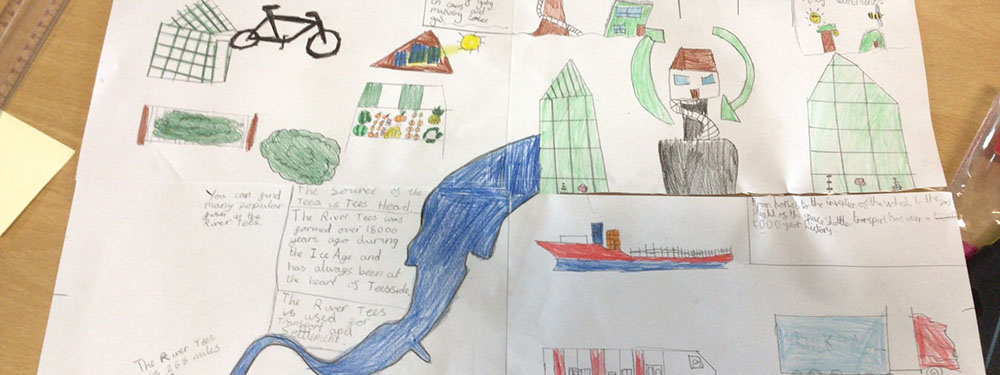
Image courtesy of Tees Valley Education, AV Dawson, PD Ports and Zarach
